by Amin Fasei on Saturday, July 28, 2012 at 1:58am
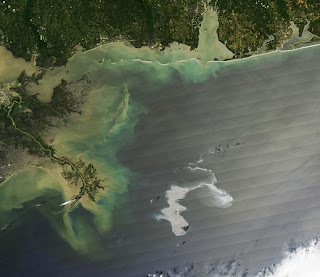
For more than 2 years, we have keenly followed our Gulf hero's stories documenting the oil slicks in the Gulf following the BP Macondo blowout and oil spill disaster on April 20, 2010. Like millions others, we could have swore her narration and aerial photos implicated BP of the continuing spills and leaks from the Macondo reservoir. One member of our group however, fowarded this story and her statement "I have never stated that the oil we have been finding is coming from the Macondo well."
If this statement is true, then we must have all been misled. If all the periodic oil slicks (miles and miles of them) had been "natural", where were all the aerial photos and intense reporting of such grand natural phenomena prior to the disaster?
Were they spraying Corexit to sink all the "natural" oil spills and seeps prior to the disaster? Were the Gulf residents complaining of sickness from hydrocarbon poisoning from such "natural" oil spills and seeps before the disaster?
Hard to believe the recent spate of "new found oil" in various forms (oil slicks, oil sheens, tar balls, tar mat, dead dolphins and other wildlife, oiled and mutated sea lives just to name a few) could have been a new natural phenomenon.
Hey, if oil is finding itself to the surface, there must have been "natural" major leaks somewhere after April 20, 2010 or maybe the govt and oil companies had been hiding this vast shallow natural resources from the public all this while.
WOW! All these vast oil resources just beneath our feet and we had to fight all these expensive, endless "oil wars" on foreign lands, thousands of miles away just to protect our American's oil supply. Couldn't the American oil companies drill nearer and cheaper in shallow Gulf waters? We could have been "rich" like the Arabs Sheiks with oil flowing out of our ears. Sorry, apologize to all oil spill workers who did complain of oily brown discharge out of the ears.
Doesn't seem to add up here or are we missin' somethin' ?
Oil Still Gushing From BP Well In Gulf By Adonai
September 3, 2011
http://thewatchers.adorraeli.com/2011/09/03/oil-still-gushing-from-bp-well-in-gulf/
She continued, “We found significant amounts of oil in globule form still at the Deepwater Horizon site and at the Taylor Energy site, and we saw miles-long surface rainbow sheens from two different leaking platforms between [Deepwater Horizon] and the Chandeleur Islands.”
When this reporter asked her about leaks in the gulf’s seafloor, Ms. Schumaker discussed how often she sees oil residue when flying over the gulf. She said, “If BP [officials] can’t see anything from the air with their own eyes, can we trust what they claim to see, or don’t see, under the water?” Ms. Schumaker also pointed out a report that links new oil samples with the Macondo site.
It seems conclusive that even if the actual drill site of Deepwater Horizon has been sufficiently capped, the damage done by BP with U.S. Government approval is too extensive to be stopped. The size of the Macondo well and its explosive pressure has been unleashed, breaking through the surface at every point of least resistance, poisoning the gulf with every passing moment.
1 Comment
1. Reply
Bonny
Posted September 16, 2011 at 7:04 AM
Just one clarification: I have never stated that the oil we have been finding is coming from the Macondo well. In fact, that ‘gravesite’ looks quiet and clear. The oil we’ve documented has been over a band that runs about 25 nm north to south and stretches between about 7 and 20 nm east (northeast to southeast) of that Macondo well. Scientists have told us that this is more oil than they’ve seen before from natural seeps in the Gulf, and there are many research vessels out there every day, both BP-contracted (such as the Bordelon family of vessels — Sarah, Rachel, Wes, etc. and the giant ROV-carrying Skandi Neptune) and government agencies (NOAA’s Okeanos Explorere and McArthur II), so the area is clearly one of great interest and, we presume, concern.
Thanks for caring about the Gulf! –Dr. Bonny (Bonny@OnWingsOfCare.org)
Excerpts from the main article:
Bonny Schumaker, founder of On Wings of Care, recently wrote about her flyover of the gulf region. On Aug. 19, she reported: “Today we flew about 500 miles over the gulf to check out yet more reports of oil. We didn’t even get to some of the places reported, because in just a few hours we had already found plenty in at least four distinct locations—all within 75miles of the shores of Louisiana.”
She continued, “We found significant amounts of oil in globule form still at the Deepwater Horizon site and at the Taylor Energy site, and we saw miles-long surface rainbow sheens from two different leaking platforms between [Deepwater Horizon] and the Chandeleur Islands.”
When this reporter asked her about leaks in the gulf’s seafloor, Ms. Schumaker discussed how often she sees oil residue when flying over the gulf. She said, “If BP [officials] can’t see anything from the air with their own eyes, can we trust what they claim to see, or don’t see, under the water?” Ms. Schumaker also pointed out a report that links new oil samples with the Macondo site.
On Aug. 25, The Mobile Press-Register stated that it collected the samples and had them tested by chemists Ed Overton and Scott Miles at Louisiana State University, who “did much of the chemical work used by federal officials to fingerprint the BP oil, known as MC252.”
The story quoted Overton as saying, “After examining the data, I think it’s a dead ringer for the MC252 oil, as good a match as I’ve seen.” All of this validates what this reporter and AFP have been covering for months.
It seems conclusive that even if the actual drill site of Deepwater Horizon has been sufficiently capped, the damage done by BP with U.S. Government approval is too extensive to be stopped. The size of the Macondo well and its explosive pressure has been unleashed, breaking through the surface at every point of least resistance, poisoning the gulf with every passing moment.
Frank Whalen has been a radio talk show host for the past 17 years, and worked as a consultant for Maxim magazine. For more news and views from Frank, see www.franklyspeakingradio.com.
By Frank Whalen, AFP

For more than 2 years, we have keenly followed our Gulf hero's stories documenting the oil slicks in the Gulf following the BP Macondo blowout and oil spill disaster on April 20, 2010. Like millions others, we could have swore her narration and aerial photos implicated BP of the continuing spills and leaks from the Macondo reservoir. One member of our group however, fowarded this story and her statement "I have never stated that the oil we have been finding is coming from the Macondo well."
If this statement is true, then we must have all been misled. If all the periodic oil slicks (miles and miles of them) had been "natural", where were all the aerial photos and intense reporting of such grand natural phenomena prior to the disaster?
Were they spraying Corexit to sink all the "natural" oil spills and seeps prior to the disaster? Were the Gulf residents complaining of sickness from hydrocarbon poisoning from such "natural" oil spills and seeps before the disaster?
Hard to believe the recent spate of "new found oil" in various forms (oil slicks, oil sheens, tar balls, tar mat, dead dolphins and other wildlife, oiled and mutated sea lives just to name a few) could have been a new natural phenomenon.
Hey, if oil is finding itself to the surface, there must have been "natural" major leaks somewhere after April 20, 2010 or maybe the govt and oil companies had been hiding this vast shallow natural resources from the public all this while.
WOW! All these vast oil resources just beneath our feet and we had to fight all these expensive, endless "oil wars" on foreign lands, thousands of miles away just to protect our American's oil supply. Couldn't the American oil companies drill nearer and cheaper in shallow Gulf waters? We could have been "rich" like the Arabs Sheiks with oil flowing out of our ears. Sorry, apologize to all oil spill workers who did complain of oily brown discharge out of the ears.
Doesn't seem to add up here or are we missin' somethin' ?
Oil Still Gushing From BP Well In Gulf By Adonai
September 3, 2011
http://thewatchers.adorraeli.com/2011/09/03/oil-still-gushing-from-bp-well-in-gulf/
She continued, “We found significant amounts of oil in globule form still at the Deepwater Horizon site and at the Taylor Energy site, and we saw miles-long surface rainbow sheens from two different leaking platforms between [Deepwater Horizon] and the Chandeleur Islands.”
When this reporter asked her about leaks in the gulf’s seafloor, Ms. Schumaker discussed how often she sees oil residue when flying over the gulf. She said, “If BP [officials] can’t see anything from the air with their own eyes, can we trust what they claim to see, or don’t see, under the water?” Ms. Schumaker also pointed out a report that links new oil samples with the Macondo site.
It seems conclusive that even if the actual drill site of Deepwater Horizon has been sufficiently capped, the damage done by BP with U.S. Government approval is too extensive to be stopped. The size of the Macondo well and its explosive pressure has been unleashed, breaking through the surface at every point of least resistance, poisoning the gulf with every passing moment.
1 Comment
1. Reply
Bonny
Posted September 16, 2011 at 7:04 AM
Just one clarification: I have never stated that the oil we have been finding is coming from the Macondo well. In fact, that ‘gravesite’ looks quiet and clear. The oil we’ve documented has been over a band that runs about 25 nm north to south and stretches between about 7 and 20 nm east (northeast to southeast) of that Macondo well. Scientists have told us that this is more oil than they’ve seen before from natural seeps in the Gulf, and there are many research vessels out there every day, both BP-contracted (such as the Bordelon family of vessels — Sarah, Rachel, Wes, etc. and the giant ROV-carrying Skandi Neptune) and government agencies (NOAA’s Okeanos Explorere and McArthur II), so the area is clearly one of great interest and, we presume, concern.
Thanks for caring about the Gulf! –Dr. Bonny (Bonny@OnWingsOfCare.org)
Excerpts from the main article:
Bonny Schumaker, founder of On Wings of Care, recently wrote about her flyover of the gulf region. On Aug. 19, she reported: “Today we flew about 500 miles over the gulf to check out yet more reports of oil. We didn’t even get to some of the places reported, because in just a few hours we had already found plenty in at least four distinct locations—all within 75miles of the shores of Louisiana.”
She continued, “We found significant amounts of oil in globule form still at the Deepwater Horizon site and at the Taylor Energy site, and we saw miles-long surface rainbow sheens from two different leaking platforms between [Deepwater Horizon] and the Chandeleur Islands.”
When this reporter asked her about leaks in the gulf’s seafloor, Ms. Schumaker discussed how often she sees oil residue when flying over the gulf. She said, “If BP [officials] can’t see anything from the air with their own eyes, can we trust what they claim to see, or don’t see, under the water?” Ms. Schumaker also pointed out a report that links new oil samples with the Macondo site.
On Aug. 25, The Mobile Press-Register stated that it collected the samples and had them tested by chemists Ed Overton and Scott Miles at Louisiana State University, who “did much of the chemical work used by federal officials to fingerprint the BP oil, known as MC252.”
The story quoted Overton as saying, “After examining the data, I think it’s a dead ringer for the MC252 oil, as good a match as I’ve seen.” All of this validates what this reporter and AFP have been covering for months.
It seems conclusive that even if the actual drill site of Deepwater Horizon has been sufficiently capped, the damage done by BP with U.S. Government approval is too extensive to be stopped. The size of the Macondo well and its explosive pressure has been unleashed, breaking through the surface at every point of least resistance, poisoning the gulf with every passing moment.
Frank Whalen has been a radio talk show host for the past 17 years, and worked as a consultant for Maxim magazine. For more news and views from Frank, see www.franklyspeakingradio.com.
By Frank Whalen, AFP


